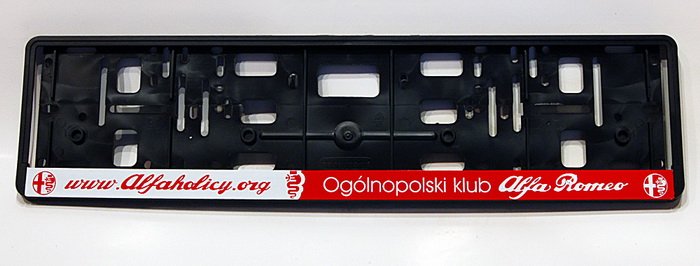
• Jeśli chcesz dodać swojej Alfie charakteru i jednocześnie zaznaczyć przynależność do naszej społeczności – to dobry moment, żeby je zamówić.

    Ramki Alfaholicy

    Szczegóły, zdjęcia oraz informacje o zamówieniu znajdziesz tutaj.

    Nie czekaj, bo jak zwykle schodzą szybko.

Chiptuning.

Also I’ve heard that the difference between N and D seems larger than the difference that would come from simply changing throttle response, I have the impression the torque curve also changes. But you can’t measure it on a regular dyno in D mode because the immobile rear wheels cause ABS error and the car jumps into N (I don’t know who measured it). Chiptuning covers all modes; you can’t load separately N and D on the Julka, and interestingly apparently in Punto EVO with the same engine it already is possible.

I measured N and D mode. I don’t know what a regular dyno is, but on this one all wheels were spinning.
 
Different, more sensitive throttle response for sure, but since the manufacturer itself gives a different torque value for D mode (250 Nm at 2500 rpm) and N (230 Nm at 2250 rpm) there’s probably something to it.
 
exactly, after modification you don’t necessarily drive faster (well, maybe sometimes), generally you gain a reserve that in situations like overtaking or highway driving comes in handy.
And on the highway you can never have too much power, in my Julie MA I felt a lack of it especially when accelerating after coasting.
you’re right, it would be nice to have a bit more torque, especially at higher speeds; here also the skill of how to most effectively time gear changes to keep the engine in its sweet spot between peak torque and peak power matters. The torque curve of a specific example will be necessary, though 99% of my driving isn’t on highways but on normal roads and in the city, :) I’m not saying I won’t chip someday—just in my own time.
 
Last edited:
Maybe someone can chime in who already has a chip in the Julka MA. How does the car behave, can you feel a difference in dynamics, fuel consumption and do components withstand nearly 200 km. I wonder if it's worth spending 1.5k, especially if it would be dangerous for the car.
 
Another, more sensitive throttle response is certain, but since the manufacturer itself provides a different torque value for D mode (250 Nm at 2500 rpm) and N (230 Nm at 2250 rpm) then there is probably something to it.

I drove in N and D with Torque program enabled. In D at max boost pressure was about 0.1 bar higher than max in N.
 
Another, more sensitive throttle response is certain, but since the manufacturer itself provides a different torque value for D mode (250 Nm at 2500 rpm) and N (230 Nm at 2250 rpm) then there is probably something to it.

I looked into the manual, for the 1.4 TB there is one torque value, there is no distinction for N and D and Cinek confirmed this on the chip, however for the 1.4 MA and 1.75TBi there is indeed a distinction for N and D. In any case in my TB in N after the chip I have 265 Nm, and in D it wasn’t braking, but Cinek probably set about 0.2 bar more and you can really feel it.
 
tx555 said:
200 HP 300 Nm (or more) in a Julka on standard suspension is a misunderstanding and an overkill, such a car won’t ride well and I don’t mean just rolling around :) . Even stock, hard to fully utilize the capabilities engine MA due to interference with systems and too soft suspension


don’t overdo it, Giulietta 1.4 MA isn’t that soft (especially with the sport package), the suspension is similar to the QV (there is probably a cm lower) and the QV has much more power and torque stock. Besides you need to know how to use the power properly and a boosted Julka will handle turns quite well, of course with a dedicated suspension from Bilstein/Eibach or Novitec it will perform even better but it certainly isn’t a misfit for power around 200hp+.

I recently had the opportunity to attend a training at a WORD driving technique improvement center (slalom, a stretch of track, a skid plate, a jerk test, etc.), Julka performed very well. When avoiding an obstacle and braking before an obstacle on the skid plate they advised me to increase speed by about 10 kph above the recommended so there would be a challenge at all. Bridgestone RE050A tires, with reinforced sidewalls, surely also positively influenced performance.

In spring I will probably attend the second part of the training, more advanced


Last edited:
no, they aren’t Run on Flat, they simply have reinforced sidewalls to resist deformation in corners. This has its downsides, ride comfort on rough surfaces is lower. After changing to winter 17" from summer 18" it seems like I’ve shrunk at least 2 sizes
 
don’t exaggerate now, Giulietta 1.4 MA isn’t that soft (especially with the sport package), besides the suspension is similar to that from the QV (there is probably a cm lower there) and the QV has much more power and torque from the factory. Besides, one has to know how to use the power properly and the little Julka will handle the corners quite well, of course with a dedicated suspension from Bilstein/Eibach or Novitec it will perform even better but it certainly isn’t a mismatch for power around 200hp+.

well I was talking about the standard suspension and not the sport package or QV. They should give SP as standard for MA and it would be just right. Generally, for fast driving on stock, it’s too soft
(and I don’t mean highway-smoothing here because that doesn’t require either suspension or skill). Whoever has driven a bit faster on the standard suspension of a 170-horse Julka on winding mountain roads will know what I’m talking about. That’s my opinion but surely everyone can have different ones, own requirements, preferences and other safety limits - no point discussing this further. Just a side note because we’re drifting further from the topic :)
 
Last edited:
I agree that everyone has different preferences, I personally have the sport package and that suspension with the current power holds up and I’ve driven it in various conditions, including on serpentine roads. I would gladly switch to Eibach/Bilstein and add ARB but for now I lack funds ;)
 
attachment.php
I wouldn’t mess with it, I don’t feel a difference. I did have a strong stock (under 183HP) but as you can see on the chart at 5200 rpm it quickly blows up. TURBO can’t cope anymore....
 

Attachments

  • gulietta_wykres.jpg
    gulietta_wykres.jpg
    112.9 KB · Views: 404
I wouldn’t mess with it, I don’t feel a difference.
And why did the tuner cut torque below the stock range to 2200 rpm? Is it due to a measurement error - a difference in the lines? don’t you feel nearly a 30Nm gain? was the tuning done on 95 Pb or on 98 Pb?
 
Good question, I’ll ask the guys why torque dropped. I’m only using Pb 95.
 
the power starts dropping very early for you, with me the drop happens only from 5660, I do have a decat but with cat max it was around 100 rpm lower. Could be not so much the turbine but the oil, my guys told me during chiptuning that the stock Selenia PE or K loses some properties under boost, becomes too thin, oil pressure drops. I’ve mostly always run Selenia Sport Power, I also tested Millers but my sample works best with Selenia SP, too bad I had Selenia PE during chiptuning :/ and it was weak, power dropped after 2 measurements, had to wait. FMIC maybe also can’t cope
 
183562-chiptuning_-gulietta_wykres.jpg
I wouldn’t mess with it, I don’t feel a difference. I did have a strong stock (under 183KM), but as you can see on the chart at 5200 rpm it quickly blows up. TURBO can’t cope anymore....

Is it possible that for example at 5200 rpm you had knocking combustion and the ECU intervened, and not the turbo being unable to deliver? I don’t know enough, but if there was such a possibility (perhaps a tuner could comment), it might be worth making the chart again but this time after filling with Pb98? Unless you’d have to tune again, because this drop could be a deliberate cut of the torque curve by the tuner, because maybe he observed knocking combustion and tweaked something so it wouldn’t occur (so the ECU wouldn’t intervene). I somehow recall from conversations with Cinek that you can nicely push the top but with Pb98 (up to 10 HP more than on Pb95)
 
Last edited:
Then I must tinker something... And the oil really is Selenia K P.E. MultiAir - I didn’t know it could have such an effect
 
I recommend you follow the whole oil thread, but… Selenia is not equal. From what I remember, the general understanding is that the best available Selenia for MA is the 0W30 (Selenia Digitek P. E. 0W30 ACEA C2). It’s quite modern, has PAO, friction modifiers and is better than those classic Selenias 5W40 (not about viscosity class but about base oil and additives).

The whole thread, but for example this post: http://www.forum.alfaholicy.org/mito_giulietta/107590-giulietta_jaki_olej_-14.html#post1425721

The question is slightly debatable: why does the manufacturer recommend this oil only from a certain year? Were there secret changes in the MA module, or is it a whim. In any case, for many Julkas the instruction gives this 0W30, C2 as recommended. And as for tuning vs boosting vs oil. Julka has a fairly decent oil cooler, someone measured the temperature in real fast driving on the autobahn with the pedal to the floor, and as I remember the oil temperature stayed within reasonable limits (somewhere up to 100... a few degrees Celsius). I don’t see a direct reason why a drop in density/viscosity would negatively affect power. It could affect engine longevity (wear), but I wouldn’t believe there’s so much friction that it truly limits engine power. I’d like to know the effect of changing the stock IC to the one from 1.75. It should be bigger and more efficient. In ASO around 950 PLN, I think. Or maybe it even plugs & plays?
 
Amortyzatory
Back
Top