
-
Jeśli chcesz dodać swojej Alfie charakteru i jednocześnie zaznaczyć przynależność do naszej społeczności – to dobry moment, żeby je zamówić.
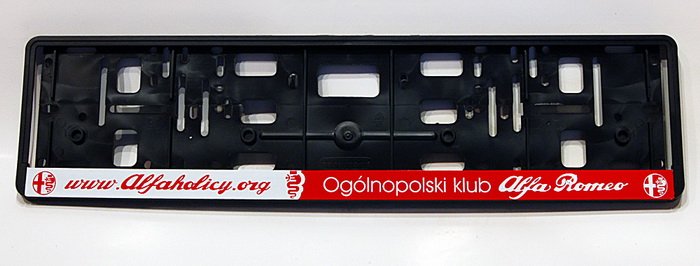
Szczegóły, zdjęcia oraz informacje o zamówieniu znajdziesz tutaj.
Nie czekaj, bo jak zwykle schodzą szybko.
You are using an out of date browser. It may not display this or other websites correctly.
You should upgrade or use an alternative browser.
You should upgrade or use an alternative browser.
Engine temperature 1.4 MA
- Thread starter Mr-dupa
- Start date
- Polski
- English
- Alfa Romeo discussions in English
- Machine-translated text
Mario71
Member
In Jeep Renegade 1.4 140 groups it appears the engine runs at 80C and this is a natural operating temperature. After replacing the thermostat I still have 80C and group members say it’s OK. Therefore I came here to ask if that should actually be the case. I have a problem with LPG because it deposits butter under the cap even in summer after a long drive. On petrol this effect does not appear as much although it does (I drive to work 10 minutes, so the engine is not warmed up). The coolant sits in place and nothing disappears…. I’m looking for the cause…It should have a temperature of 90 C, not reach
Mario71
Member
Many Giulietta users treat the thermostat casually – 'it works, because the gauge is roughly vertical'. In the 1.4 MultiAir engine this thinking leads straight to thousands of zlotys in costs. Why?
1. The MultiAir module is hydraulics, not magic
The heart of this engine is the valve actuating system controlled by oil pressure. This setup is extremely sensitive to viscosity. Oil only achieves its working properties at a strictly defined temperature. If the thermostat opens too early, the oil is too thick and the module cannot keep up with precise valve opening.
2. What happens when the thermostat "underheats"?
3. KEY: Ask the seller for a specific temperature!
When buying, don’t let yourself be talked into the line 'it fits an Alfa'.
4. False sense of security
The gauge on the dashboard is 'cheating' – it shows 90°C even when in reality it is 78°C. Only a test with a computer on the road will reveal the truth. If the temperature drops at high speed – the thermostat is junk.
To sum up: Do you waste your time checking parameters and a few zlotys on a decent 88°C thermostat? Prepare a couple of thousand for a new MultiAir module. In this engine temperature is life.
1. The MultiAir module is hydraulics, not magic
The heart of this engine is the valve actuating system controlled by oil pressure. This setup is extremely sensitive to viscosity. Oil only achieves its working properties at a strictly defined temperature. If the thermostat opens too early, the oil is too thick and the module cannot keep up with precise valve opening.
2. What happens when the thermostat "underheats"?
- Activation faults (P1061-P1064): It starts with misfires when cold and ends with a constant fault mode.
- Module degradation: Running with oil too thick creates enormous internal resistance for the delicate pistons in the MA module.
- Fuel in the oil: The engine runs too long on 'start-up', fuel thins the oil and damages its lubricating properties.
3.
KEY: Ask the seller for a specific temperature!When buying, don’t let yourself be talked into the line 'it fits an Alfa'.
- There is one rule: You must ask about the opening temperature. * Many replacements open at 80°C or 84°C – for a standard engine this might be enough, but for MultiAir it isn’t TOO LITTLE.
- The correct thermostat (for example the original Ricambi 55215006) is marked 88°C. Only such a temperature guarantees that the oil will have perfect liquidity for the hydraulic valvetrain.
4. False sense of security
The gauge on the dashboard is 'cheating' – it shows 90°C even when in reality it is 78°C. Only a test with a computer on the road will reveal the truth. If the temperature drops at high speed – the thermostat is junk.
To sum up: Do you waste your time checking parameters and a few zlotys on a decent 88°C thermostat? Prepare a couple of thousand for a new MultiAir module. In this engine temperature is life.
Not true about this thermostat. For the MA engine there is a thermostat that opens at 80°C. During normal driving, my temp varies from 77 - 89 depending on the season and speed. I know this because I currently have the temperature measurement in the LPG app connected to OBD turned on. Why it is 80°C, I don’t know, I can only guess, but that’s how it is. Versions without MA have higher opening temperatures. Regarding viscosity, the engine control unit analyzes it based on the indicated temperature of the module, but that is a different sensor than the water temperature sensor. Currently I drive on Mobil1 FS 0W40 + ceramic ester and the system is superb. (by the way).
To be precise about my case with a Swiss-market Alfa: I pulled out of the car an old thermostat that had marked 88 degrees. I bought a new OEM one, not knowing that it opens at 80 degrees. After replacement fuel consumption increased a lot, and on cold days the engine temperature never exceeded 82 degrees (measured via OBD, even with heating off) and during a long drive. Additionally once or twice a month while driving, a fault appeared P1061 (without misfire).
I went back to the thermostat 88 degrees and as if a weight was lifted off – consumption dropped, and the faults stopped appearing. I didn’t perform any adaptations, even though the MultiAir module has been in the car since new. And that’s my truth.
I went back to the thermostat 88 degrees and as if a weight was lifted off – consumption dropped, and the faults stopped appearing. I didn’t perform any adaptations, even though the MultiAir module has been in the car since new. And that’s my truth.
well OK
I’m just saying that for MA the thermostat is at 80 degrees and that’s all.
Ok, you have those experiences, I don’t dispute that.To be precise about my case with a Swiss-market Alfa: I pulled out of the car an old thermostat that had marked 88 degreesBought a new OEM, not knowing that it has an opening at 80 degreesAfter replacement fuel consumption rose a lot, and on cold days the engine temperature never exceeded 82 degrees (measured via OBD, even with the heater off) and after long drives. Additionally, once or twice a month during driving a fault started to appear P1061 (without misfiring).
I went back to the thermostat 88 degrees and as if take a weight off – fuel consumption dropped, and the faults stopped appearing. I didn't perform any adaptations, even though the MultiAir module has been in the car since new. And that’s my truth.
I’m just saying that for MA the thermostat is at 80 degrees and that’s all.
