
-
Jeśli chcesz dodać swojej Alfie charakteru i jednocześnie zaznaczyć przynależność do naszej społeczności – to dobry moment, żeby je zamówić.
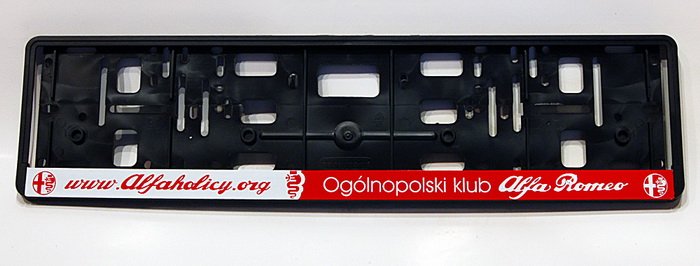
Szczegóły, zdjęcia oraz informacje o zamówieniu znajdziesz tutaj.
Nie czekaj, bo jak zwykle schodzą szybko.
You are using an out of date browser. It may not display this or other websites correctly.
You should upgrade or use an alternative browser.
You should upgrade or use an alternative browser.
EGR plug - how does the engine react after installing it ???
- Thread starter Junior
- Start date
- Polski
- English
- Italiano
- Alfa Romeo discussions in English
- Machine-translated text


radzik2908
New
Rafał, on Friday I disassembled the EGR, there was a ton of crap. I cleaned with a brush and gasoline, unfortunately the solenoid got stuck. I think tomorrow the package from Tomek in Kraków (our Alfa supplier) should arrive with a regenerated EGR and the post-change gasket, I’ll describe my impressions. Simply removing the valve is a five-minute job.And how to approach cleaning the EGR? And does it even make sense if I have a hole-plug installed? Best regards. - Rafał

And how to approach cleaning the EGR? And does it even make sense if I have a hole-plug installed? Best regards. - Rafał
It makes sense, but check the condition of the solenoid. If it doesn’t move smoothly (the plunger from the solenoid should protrude about 0.5 cm after unscrewing the solenoid from the rest of the EGR and be easily pressed with a finger) - then you need to disassemble the solenoid and clean it.

And is it normal that the plunger sometimes doesn’t pop back out after being pressed and stays pressed, or is this a snag or is this how it should be?
It makes sense, but check the condition of the solenoid. If it doesn’t move smoothly (the plunger from the solenoid should protrude about 0.5 cm after unscrewing the solenoid from the rest of the EGR and be easily pressed with a finger) - then you need to disassemble the solenoid and clean it.
B
BURATINO
Guest
Rafał, on Friday I disassembled the EGR, there was a ton of crap. I cleaned with a brush and gasoline, unfortunately the solenoid got stuck. I think tomorrow the package from Tomek in Kraków (our Alfa supplier) should arrive with a regenerated EGR and the post-change gasket, I’ll describe my impressions. Simply removing the valve is a five-minute job.
A aren’t these just half-measures? Wouldn’t it be better to do it comprehensively, including the manifold?
radzik2908
New
In my case the EGR had been open the whole time and the Alfa had no power up to 2000 RPM, so I cleaned the valve (by the way) and pressed the injector core with force so the valve would stay closed all the time, and so it would be drivable. Power returned, and I will clean the intake manifold, probably closer to spring.A aren’t these just half-measures? Wouldn’t it be better to do it comprehensively, including the manifold?
And is it normal that the plunger sometimes doesn’t pop back out after being pressed and stays pressed, or is this a snag or is this how it should be?
It should pop out; there is a spring there that gently pushes it out. If it doesn’t pop out sometimes - that’s the first sign of sticking.
Thanks for the reply. Tomek_KRK, probably this sticking causes a slight jerk during acceleration. I’ll try to address it in my free time or invest in a new EGR.
It should pop out; there is a spring there that gently pushes it out. If it doesn’t pop out sometimes - that’s the first sign of sticking.
S
szewi
Guest
The EGR is completely blocked off and turned off in the software, but from what I know you can block it yourself without a problem, but if something goes wrong when you disable it in software then it will be bad.
You can block the EGR completely and disable it in software, but... opinions on this are divided even among well-known tuners. Removing the EGR yourself is foolish, because if you’re going to remove it you should disable it in the program, otherwise you can cause damage. Software disabling also isn’t fully known what long-term effects it may have. Besides ecology, EGR serves several other roles: lowering the combustion temperature of the mixture, helping the engine reach optimal operating temperature faster, helping suppress turbine idle, and ecology, although that last one is a weak argument for some. By removing it partially we risk: higher combustion temperature, possible knocking, and as is known higher combustion temperature = lower engine durability; the engine will run noisily at low speeds (this can be corrected by software); the turbo will have it harder; the engine will reach optimal operating temperature slower; about ecology I won’t write. Therefore instead of removing it there are advocates of partial blocking and from time to time they suggest cleaning the intake manifold and the valve itself, despite the fact that I don’t like the EGR because it gets dirty but it’s give and take

B
BURATINO
Guest
You can block the EGR completely and disable it in software, but... opinions on this are divided even among well-known tuners. Removing the EGR yourself is foolish, because if you’re going to remove it you should disable it in the program, otherwise you can cause damage. Software disabling also isn’t fully known what long-term effects it may have. Besides ecology, EGR serves several other roles: lowering the combustion temperature of the mixture, helping the engine reach optimal operating temperature faster, helping suppress turbine idle, and ecology, although that last one is a weak argument for some. By removing it partially we risk: higher combustion temperature, possible knocking, and as is known higher combustion temperature = lower engine durability; the engine will run noisily at low speeds (this can be corrected by software); the turbo will have it harder; the engine will reach optimal operating temperature slower; about ecology I won’t write. Therefore instead of removing it there are advocates of partial blocking and from time to time they suggest cleaning the intake manifold and the valve itself, despite the fact that I don’t like the EGR because it gets dirty but it’s give and take
Well written; in the initial phase I also considered complete blocking. However, after weighing pros and cons I decided only on this throttler (plunger). Because I spend most of my time on long journeys.
radzik2908
New

AirAjti
New
- Joined
- Jun 18, 2012
- Messages
- 2,439
- Location
- Lubin
- Car
- Była 159 Berlina 2.4JTDm '06... aktualnie Tipo 1.4T-Jet z fabrycznym nadtlenkiem gazu
People! The EGR was blocked in my workshop and disabled in the ECU... however, after connecting FES the control of the EGR is present! It shows percentage values of EGR opening and ENABLED EGR control :/
I should add that after performing this service the car threw a CHECK ENGINE error (FES said it was the EGR)... but after a minor mishap where the engine just stalled when starting, the light went off and hasn’t appeared since (yet the ECU stubbornly controls the valve...). What are the consequences of such a state?
I should add that after performing this service the car threw a CHECK ENGINE error (FES said it was the EGR)... but after a minor mishap where the engine just stalled when starting, the light went off and hasn’t appeared since (yet the ECU stubbornly controls the valve...). What are the consequences of such a state?

bojaco
New
And doesn’t installing a throttling plate - a perforated metal sheet - not restrict exhaust gas flow to the intake? Because if so, exhaust gas would accumulate in the EGR due to restricted flow to the manifold, and that could cause the EGR to clog faster? Correct me if I’m wrong.
This isn’t lottery, nothing accumulates there. Lower flow = fewer contaminants.